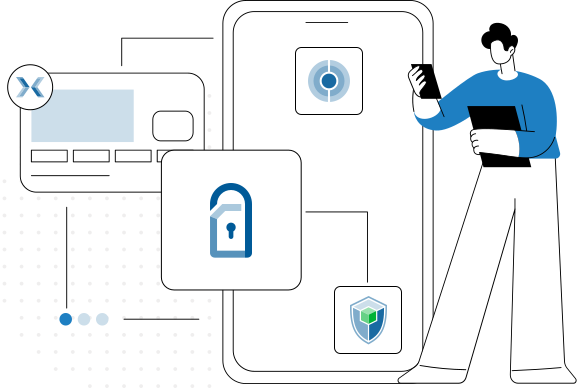
Audit-proof archiving means that data is stored in a way that is tamper-proof, traceable, and complete. This ensures that government agencies comply with all legal retention requirements.
Digital government requires secure data
These solutions help government agencies stay ahead of the curve
 Administrative data caught in the crossfire
Secure archiving, legally compliant storage, protection against attacks
Government agencies must make digital files, notices, and records available efficiently while ensuring they are archived in a legally compliant manner. Cyberattacks, legal requirements, and growing data volumes call for a new approach to managing administrative data.

More data, more threats, more requirements
For public administration, digital transformation means not only more efficient processes, but also greater responsibility in handling sensitive data.
Information must be available at all times, protected against tampering, and archived in a legally compliant manner over long periods of time.
At the same time, requirements for transparency, data protection, and IT security are increasing. As a result, professional data management is becoming a central pillar of modern, digital administrative work.
Did you know?
- Legal requirements: The German Commercial Code (HGB), the German Principles of Proper Bookkeeping (GoBD), the General Data Protection Regulation (GDPR), and administrative regulations require audit-proof archiving.
- Ransomware threat: Attacks on municipalities and government agencies are on the rise; manipulated or deleted backups are particularly critical.
- Data growth: Files, notices, and registers generate ever-increasing volumes of data that must be securely stored over the long term.
- Limited IT resources: Government agencies need simple, efficient solutions that can be integrated into existing systems.
Data Overload, Data Retention Requirements, and Cyber Risks
When administrative data becomes complex
Public administrations face a wide range of challenges
when dealing with digital data.

Growing volumes of data
Specialized procedures, registries, official notices, and electronic files generate new data every day that must be made available long-term and stored securely.
Legal Requirements
Laws such as the German HGB, the German GoBD, and GDPR require audit-proof, tamper-proof archiving that spans retention periods.
Cyber Threats
Ransomware and targeted attacks are on the rise and pose a particular threat to corporate administrative data and its backups.
Limited IT resources
Government agencies operate on tight budgets, with limited staff and complex IT infrastructures. Their file systems are not designed for archiving.

Your questions - clearly answered
Everything You Need to Know
Here you’ll find answers to the most frequently asked questions about our solutions, products, and areas of application - from security and archiving to data management.
What exactly does “audit-proof” mean?
What laws and regulations apply to archiving?
These include the German Commercial Code (HGB), the German Principles of Sound Accounting (GoBD), the General Data Protection Regulation (GDPR), and specific administrative regulations. Industry-specific regulations may also be relevant, such as those governing municipal registry entries or personal files.
Do I need any additional hardware?
No, GRAU DATA solutions such as FileLock and Blocky run on existing Windows IT infrastructure and standard servers.
How soon can I get started?
Standard industry procedures for managing electronic documents typically support systems for audit-proof archiving. This makes seamless integration easy to achieve.
Are these solutions only suitable for government agencies?
No, companies in the finance, insurance, and healthcare sectors can also use these solutions to store sensitive data in a way that is audit-compliant and protected against ransomware.
How do immutable backups work?
Backups are protected using fingerprint and WORM (Write Once, Read Many) technology. Once stored, they cannot be modified or deleted.
What happens in the event of a ransomware attack?
With immutable backups, all data remains intact and can be fully restored. Management remains operational and compliant with the law.
Can I archive large amounts of data for the long term?
Yes, solutions like XtreemStore enable scalable, transparent long-term archiving, even for billions of documents.


